


The Welsh Dream: Democracy Reloaded: Councilor Sam Bennett on Rediscovering Your Power
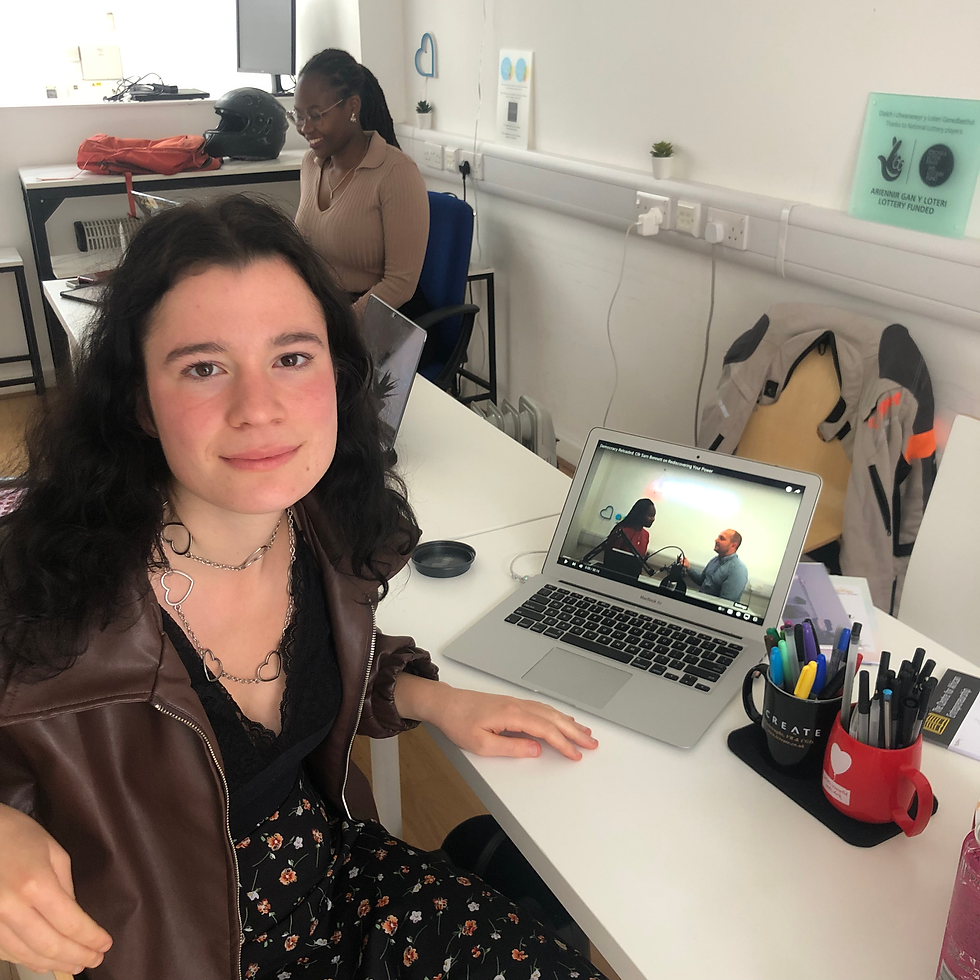
This blog post is about a recent episode from our podcast @TheWelshDream where we are joined by Sam Bennet, the Councilor for Waterfront, Swansea. This episode explores the importance of democracy and political participation, being topics that Sam is particularly passionate about. There are many topics that explores in this podcast, including the barriers which many face in engaging in politics, the ways in which political engagement can be improved as well as Sam’s own vision for Swansea.

About our Guest
Before we delve any deeper into what Sam discusses in the Welsh Dream, first of all it is clear that Sam’s personal background and values have shaped his own commitment to politics. Having studied European politics alongside getting involved in campaigning for a political party whilst at university, Sam explains that he has always had a strong interest in politics. Furthermore, he explains that he developed a commitment to getting involved in politics having felt as though his personal values did not align with the current political climate. Therefore, getting in politics would enable him to make a positive impact. Evidently, this devotion drives him to this day, where he has consistently demonstrated dedication to his role. For instance, within the 15 months that he has been councilor for Swansea, roads which had previously been blocking disabled access had been sorted.
Democracy and Political participation: Defined!
Sam begins by defining democracy as literally ‘the power of the people.’ He then delves deeper by distinguishing between the two types of democracy, being direct democracy and representative democracy. Sam defines direct democracy as where ‘everyone is involved in all decision making’, whilst he explains that representative democracy is where people decide on who is going to represent them. Meanwhile, political participation ‘refers to voluntary activities undertaken by the mass public to influence public policy, either directly or by affecting the selection of persons who make policies’. Sam explains that there are multiple ways by which people can participate within politics. These include voting, signing petitions, campaigning, communicating with their local MP, and finally with press releases. Importantly, Sam stresses that all of these forms of political participation are ways by which anybody can assert their influence in politics.
But do people always engage? Short answer; no…
Despite the multiple ways by which anyone can exert their influence within politics, as Sam explains, this does not necessarily translate into practice. For instance, often elections have very poor turnouts. Sam points to Swansea West at the previous Senedd Crymru elections as an example of poor participation, whereby only 40.45% of people who were able to vote actually turned out to do so. According to Sam, one factor which might have exacerbated this poor turnout, as well as poor turnouts in other wards, is the perception of there being ‘safe seats’. This refers to seats whereby the same party wins the largest share of the vote each time, meaning that the same party has held the seat in a significant period. This leads to the voter believing that the impact of their vote is negligible, causing them to subsequently choose not to vote. Nonetheless, for Sam, very low turnouts end up illuminating the significance of us as individuals having the choice to vote, because it reflects how people really do have the potential to influence the outcome of elections.
‘If the 59% of people had shown up to the polls, there might have been a different outcome’- Sam Bennet
Nonetheless, Sam urges that it is also important that this problem is addressed by politicians, pointing to the huge differences between this turnout and the turnouts of the recent UK referendums.
The Welsh Dream shares Bennet’s view, because whilst we believe that it is important for individuals to make that personal choice to vote, we also believe that it is fundamental to address the deeper reasons as to why elections can have low turnouts. This is as well as addressing some of the causes for why there can be low levels of broader political engagement.
Sam shows that there are significant reasons as to why there are often low levels of political participation.
To begin with, Sam demonstrates that inequality is a significant cause of a lack of political participation. This is because an unequal access to essential resources including food lead to an unequal access to politics. He refers to this as ‘poverty of time’, whereby those who have to struggle more to access essential resources are subsequently going to have less time and energy to access politics. As a consequence, politics becomes inaccessible to a large number of people.
Moreover, Sam asserts that there is often a ‘lack of trust’, especially in high level politicians. He explains that this is partly because high level politicians often tend to be ‘out of touch’ with the average voter.
Finally, Sam stresses that the electoral system could be a cause of poor political engagement because of it resulting in an outcome where ‘the winner takes it all’. As a consequence, it means that many people’s votes, in effect, simply do not count. Therefore, it follows that many choose not to vote if they feel as if their vote will not contribute towards the final outcome, and that their vote will therefore not be represented.
How engagement can be improved
By now, it has become clear that there is a problem of low political engagement, and that there are many underlying causes which contribute to this. Fortunately, there are however multiple ways by which poor political engagement can be tackled.
First of all, Sam asserts that it is important to make politics more accessible. This can either be done by improving education, or by reducing the amount of inequality in society. We believe that if this occurred, first of all, education would provide young people with essential knowledge of politics.
As well as this, we also think that educating young people more within the realm of politics would provide them with the confidence and ambition to get more involved and to have an influence. Subsequently, this could lead to pivotal changes within the political climate, both locally and nationally.
Furthermore, we agree with Sam in that reducing inequality would enable large groups of people to gain the time and resources to devote to politics. This could include one simply choosing to vote in an election, or someone choosing to get more deeply involved, such as within a campaign.
Moreover, Sam believes that in order to improve trust in politicians, it is important to ‘bring power down’, so that people have more of an influence on local policies. Sam also believes that it is important that politicians remain present and ensure that they are present to everyone. Therefore, he argues that it is often necessary for politicians to reach out to communities and people who are harder to reach.
Finally, Sam believes that PR (proportional representation) is a better voting system compared to FPTP because it means that smaller parties get represented. As a result, this would mean that the electorate’s views are better represented.
Sam Bennet’s vision for Swansea
Briefly, Sam explains his vision for change within Swansea stressing the importance of ensuring that there are more shops and businesses that open, not only within Swansea but also within the surrounding communities. We believe that this is important because it opens up more employment opportunities. Meanwhile, it is also crucial that communities have spaces, filled with thriving businesses, which people can use to get outside and meet other people. Sam believes that reducing inflation would play a pivotal role in enabling this change, because the ongoing cost of living crisis means that as it stands, people have less ‘pocket money’ to spend in shops. He also believes that economic growth is important for Swansea, as a means of enabling young people to stay within the area. This is something that we at the CAE is especially important, because we feel that it is a massive shame that there are many school leavers as well as students who feel that they have no choice but to leave Swansea in order to find work.
Questions to Sam
What would you say to a disillusioned voter who feels their voice doesn’t count?
“Your voice counts less if you’re not engaging in the process”.
What would you change about the current political landscape that we’re in?
“I am a firm believer in power being given to the people at the absolutely lowest levels”.
What is Sam Bennet’s Welsh Dream?
And finally, Sam asserts that he has already explained his Welsh dream throughout this episode. However, to sum up, Sam’s Welsh dream is that people should be trusted to ‘run their own lives’, meaning that it is important that people have ‘influence over themselves.’ In other words, ‘people should have as much freedom and liberty as possible’.
References
Written by: Victoria


Comments